

Get the Money Moving to drive the climate transition
What’s needed for European corporates
to meet net-zero goals

Get the Money Moving to drive the climate transition
What’s needed for European corporates
to meet net-zero goals

Only one in five European companies is making the kind of substantive changes necessary to move to a greener business model, even as more than half report having climate transition plans in place. An even larger number has set emission-reduction targets, including a portion for Scope 3 supply chain and end user emissions.
This research in the 2024 CDP report "Get The Money Moving" is based on an analysis of responses from more than 1,600 European companies disclosing through CDP, representing 89% of the region’s market capitalization. It assesses companies against a five-point framework looking at critical factors such as capital investment, new product development, and supply chain management. While the data demonstrates progress by companies in reducing emissions over the last four years, it also reveals the substantial limits that still exist in implementing key aspects of transition plans and driving real change on business models.
Exhibit 1: Progress toward a Green Business Model
Distribution in percentages (%)
Source: Oliver Wyman analysis, CDP data
Exhibit 2: Utilities, steel, and transport lead on closing the implementation gap
Distribution in percentages (%)
Note: The implementation gap framework evaluates companies on five key drivers of a transition to a green business model: Steering the business, capital expenditure, supplier decarbonization efforts, engagement with customers, low carbon product, and technology innovation
Source: Oliver Wyman analysis, CDP data
Investment capital is key to green transition
Levels of capital investment play a critical role in whether a company can achieve results. Yet 70% of European companies disclosing through CDP dedicated less than a quarter of their capital expenditures (CapEx) to projects that are aligned with their transition plan or a sustainable finance taxonomy. In some cases, accessing finance is part of the challenge. One-third of companies disclosing through CDP identified access to capital as a key concern in transition planning. That percentage rose dramatically among industries with higher emissions.
Exhibit 3: Green Capital Expenditures varies widely across industries
Distribution in percentages (%)
Note: Question C3.5a – Quantify the percentage share of your spending/revenue that is aligned with your organization’s climate transition
Source: Oliver Wyman analysis, CDP data
Often the common constraint for companies and financial institutions is that green business models remain less commercially attractive than the existing models they seek to replace. In many sectors, government policy has not yet shifted the economic landscape decisively enough in favor of greener products and services. At the same time, in many industries, the demand for “green” products or the willingness to pay a premium for those is still limited. There is a concern that while Europe has led the way in many aspects of climate regulation and policy, other regions have taken bolder action using incentives and industrial policy to attract investment capital and build competitive advantages in strategically important parts of the green economy.

Sectors that could help focus on decarbonization
To explore the practical realities companies are facing, we looked in greater detail at three critical sectors: electric utilities, steel, and automotive. All three are major emitters and play a pivotal role in the decarbonization of many other sectors. The good news is that the three are already investing more than most in the transition — with over 50% of CapEx going to green initiatives. Still, some important gaps and disconnects are apparent:
- By 2030, electric utilities could fall €285 billion short on required CapEx investments in renewables and upgrading the grid key to the push to electrify and decarbonize transport and heavy industry.
Exhibit 4: Capital investment utilities need to make to achieve emissions reduction
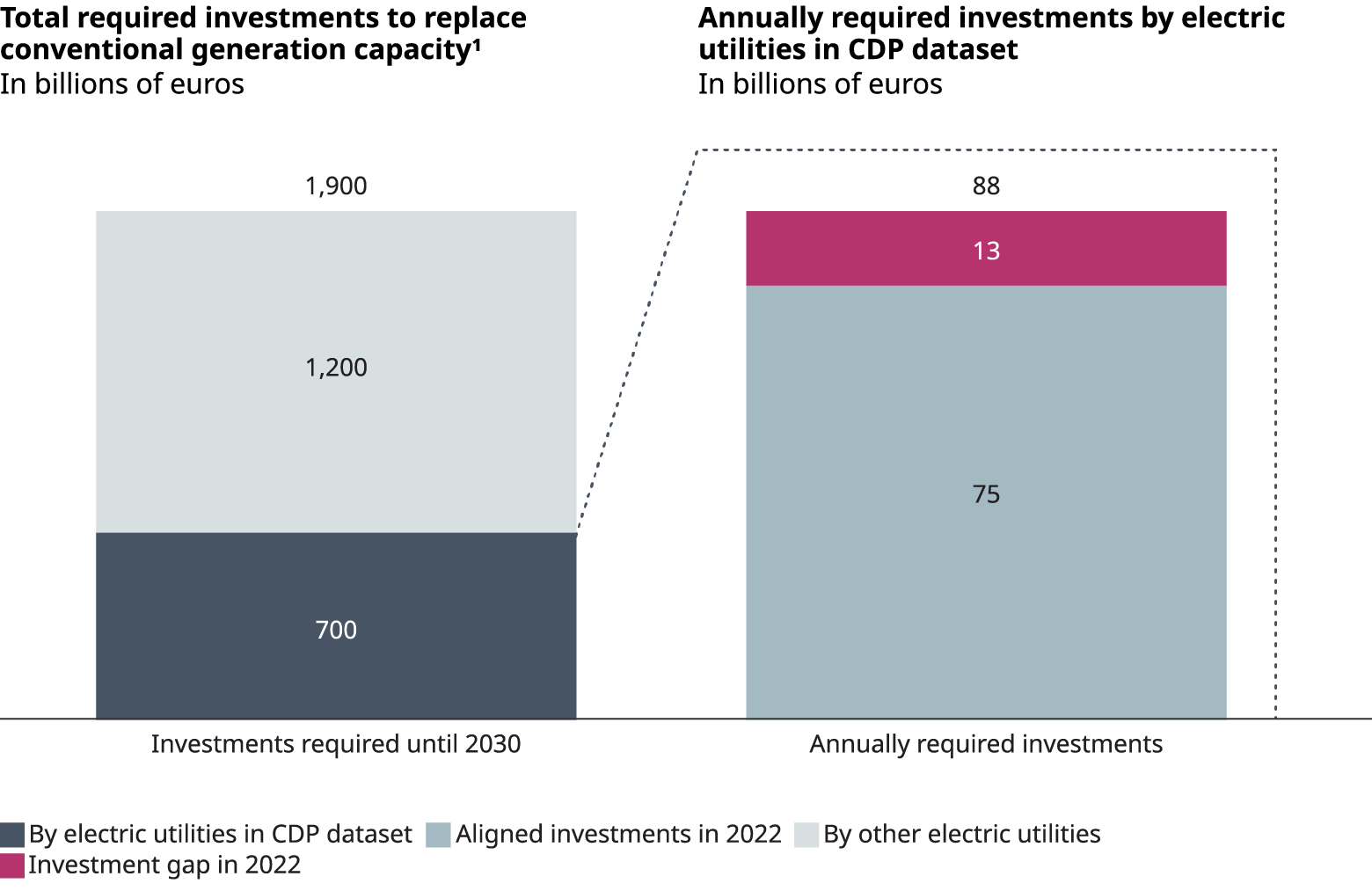
Notes: 1. Including coal-and oil-based but not gas-based power generation capacity. 2. Total conventional power generation capacity in EU to be replaced = 230GW. 3. Including only electric utilities that generated conventional power in 2022 and grid operators
Source: Oliver Wyman analysis, CDP data, IEA data, Capital IQ data (23.11.2023), rounding errors may occur
- While 87% of steel companies offer some type of low-carbon products, revenue from green products accounts for only 22% of total sales. As a result, green steel production is expected to fall as much as 18 million metric tons, or 31%, short of demand by 2035.
Exhibit 5: Low carbon products represent a small share of revenue in most industries
Distribution in percentages (%)
Note: Question C4.5a – Provide details of your products and/or services that you classify as low-carbon products
Source: Oliver Wyman analysis, CDP data
Exhibit 6: Rising green steel demand creates shortage of 18 million metric tons by 2035
CBAM: Starting in 2026, imported grey steel into Europe will be subject to an extra tariff making grey imports more expensive and European green steel more attractive
Free allowance phase out: Starting in 2026, European steel producers will gradually lose their free allowances, which in turn raises grey steel prices further driving green steel demand
Base demand: Driven by the carbon reduction goals of the separate industries and their demand growth
Source: Oliver Wyman analysis
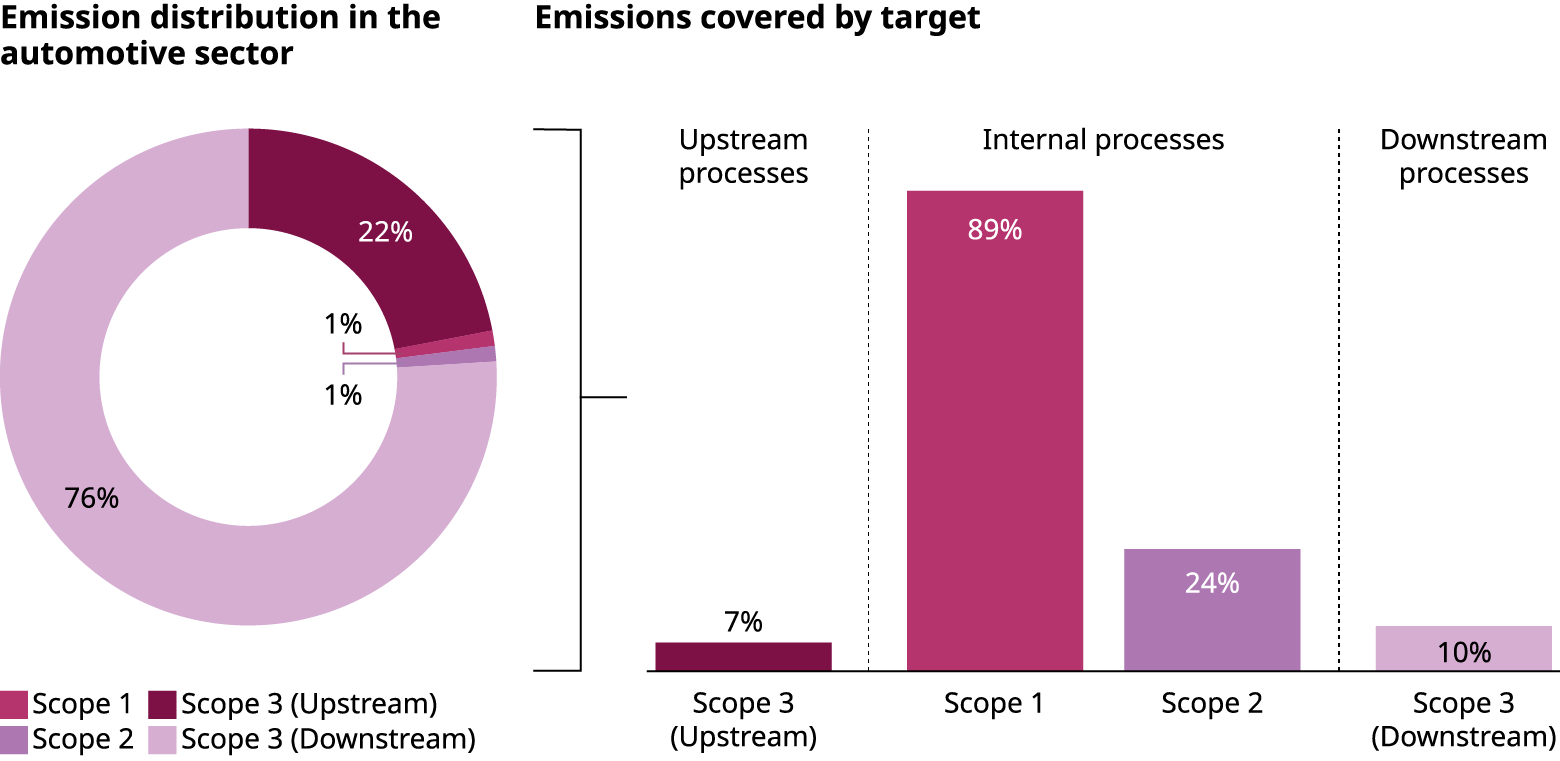
- The vast majority (90%) of the automotive industry’s carbon footprint is made up of Scope 3 emissions from its supply chain and end users. Yet only 11% of companies ensure that over 25% of their suppliers meet climate-related requirements.
Exhibit 7: Scope 3 emissions are automotive’s big hurdle, with little progress realized
Source: Oliver Wyman analysis, CDP data
Exhibit 8: Few industries have made deep progress in purchasing contract requirements
Distribution in percentages (%)
Note: Question C12.2a – Provide details of the climate-related requirements that suppliers have to meet as part of your organization’s purchasing process and the compliance mechanisms in place
Source: Oliver Wyman analysis, CDP data
Freeing up more investment for green initiatives
The challenges companies highlighted in accessing capital come despite major commitments from the finance sector. Two-thirds of financial institutions disclosing through CDP say they are taking active steps to align their portfolios to an emissions pathway that curbs Earth’s temperature increase to 1.5°Celsius above pre-industrial levels.
Most are seeking to do this through growing investment and lending into greener areas: Financial institutions globally disclosed through CDP in 2022 that they view the potential opportunities from the climate transition as 4.5 times greater than the risks. Meanwhile, exclusion policies remain mostly limited to coal and the most environmentally sensitive parts of the oil and gas industry.
Exhibit 9: Most financial services companies are assessing whether the corporates they finance are aligned with 1.5 degrees
Number of companies and percentage (%) of companies
Source: Oliver Wyman analysis, CDP data
Most financial institutions report that they are now actively assessing their client’s transition plans as part of their lending and investing processes, suggesting that companies not able to set out a clear decarbonization path may find access to capital more challenging over time. In practice, however, it is the unique characteristics of decarbonization projects that can become hurdles. This includes their often-large-size, longer time horizons, unproven markets, misalignment with institutional risk appetites, and the changing regulatory landscape they face.
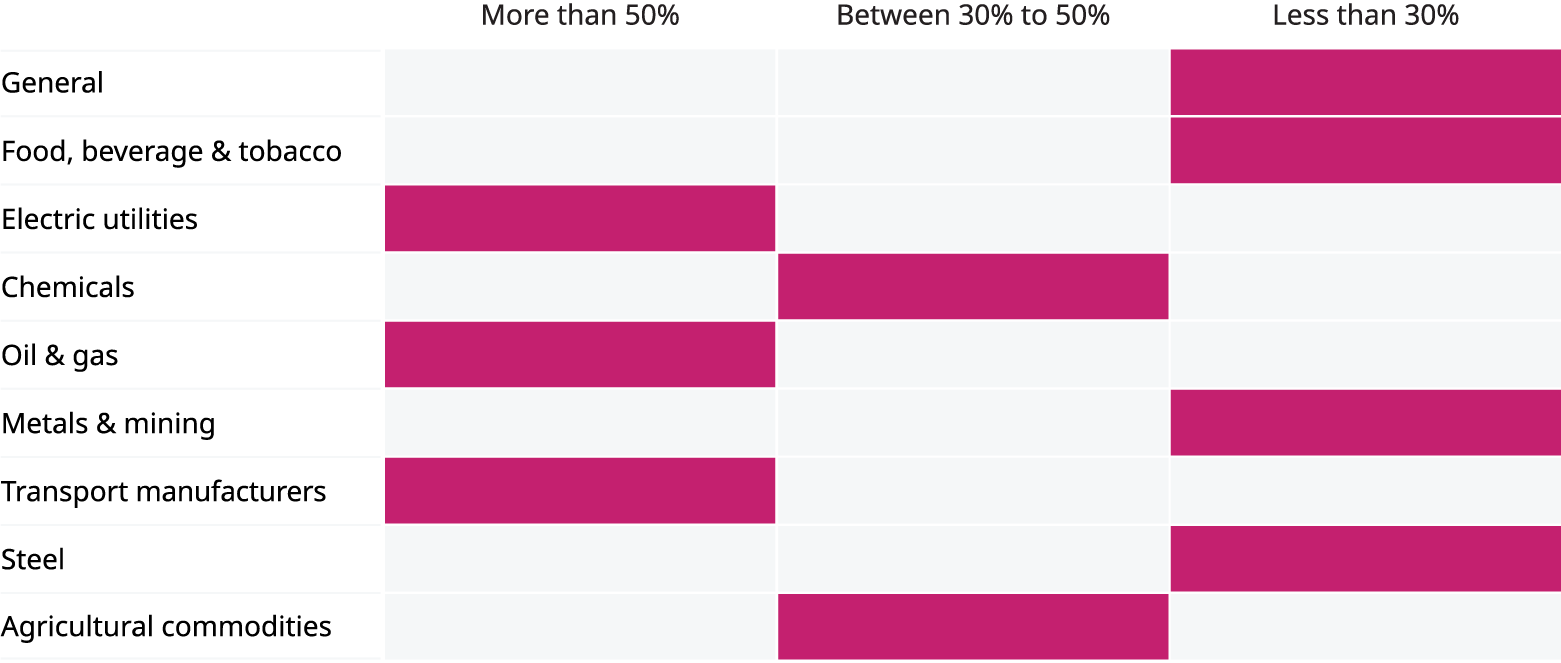
Exhibit 10: Many companies cite access to capital as a key concern
Companies identifying access to capital as key factor influencing their financial planning, distribution in percentages (%)
Notes: 1. Carbon Border Adjustment Mechanism (CBAM), 2. Inflation Reduction Act (IRA)
Source: Oliver Wyman analysis, CDP data
Exhibit 11: Pain points faced by corporates in accessing capital
Notes: Summary of key issues relate to disclosures to CDP on access to capital raised by corporates 1. Carbon Border Adjustment Mechanism (CBAM), 2. Inflation Reduction Act (IRA)
Source: Oliver Wyman analysis, CDP data

Nature's role in economy and climate
Efforts to prevent deforestation and protect water sources are the latest standards that are just beginning to take hold. Half of the world’s economy is dependent on nature, according to the World Economic Forum, which makes its salvation critical to more than just climate. Forests and bodies of water also serve as natural carbon sinks, and the outlook for climate change worsens without them.
But at this point, neither financial institutions nor industrial companies are routinely including concerns like deforestation and water security in their investment decisions or transition planning. The CDP disclosure data shows over 50% of financial institutions have no plans to protect water security or set targets for preventing further deforestation. Only 9% have set specific goals related to deforestation in their lending and investment activities, and 1% have targets for water security. This low participation may change with new European Union requirements on nature.
The need for collective action
The report encourages greater collaboration across the financial sector to spread risk among banks, development banks, private equity firms, insurance companies, traditional infrastructure financiers, and philanthropic organizations. It also calls on governments to take a more active role in leveling the playing field for climate transition products and technologies.
The data on both climate and nature reinforces the reality that no one industry can create a green transition without the support of the global economic community, governments, and nongovernmental organization. As time ticks off to 2030, the year the EU promises to cut emissions 55% as part of its 2050 net-zero pledge, the need to significantly accelerate efforts could not be clearer.
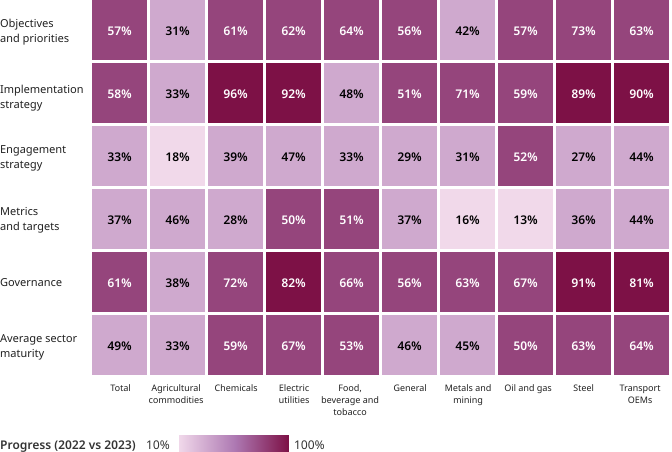
Exhibit 12: Heatmap: Disclosure against the five key elements of a transition plan
Percentage (%) of companies showing progress and comparison versus 2022
Note: 1. 2022 data set
Source: Oliver Wyman analysis, CDP data
Case studies
Featured case study
Beiersdorf
Sector – General
Featured case study
L’Oréal
Sector – General
Featured case study
MM Group
Sector – Paper and forestry
Featured case study
Symrise
Sector – Chemicals
Case study
E.ON
Sector – Electric utilities
Case study
La Banque Postale
Sector – Financial services
Case study
Lenzing
Sector – Chemicals
Case study
KBC
Sector – Financial services
Case study
Solvay
Sector – Chemicals
Case study
Stahl-Holding-Saar
Sector – Steel
Case study
Storebrand
Sector – Financial services
Case study
Zurich Insurance Group
Sector – Financial services
Authors
Thomas Fritz, James Davis, Cornelia Neumann, Dennis Manteuffel, and Ruth Krainer
A special thanks to Nils Naujok, Holger Stamm, Simon Schnurrer, Daniel Kronenwett, Iris Herrmann, Fiona Beer and Judith de Leon Kalk for their contributions to the report.
FEATURED CASE STUDY
Beiersdorf
Sector – General
“Mankind is currently facing one of its greatest ever challenges – to
drastically limit global warming. Only with a net-zero economy will we be
able to keep our ecosystems functioning, which are essential for humans to
thrive on Earth. As such, we all must act now, and we are doing our part at
Beiersdorf by taking strong measures to drive the transformation of skin
care toward eco-friendly practices across the whole value chain.
With our CARE BEYOND SKIN Sustainability Agenda, we are setting ambitious
targets, such as our climate target, which aims to reduce greenhouse gas
emissions across Scopes 1, 2 and 3 by 30% in absolute terms before end of
2025 (vs. 2018). Our group-level climate target is approved by the Science
Based Targets initiative (SBTi) to be in-line with scientists’
recommendation to limit global warming to 1.5 degrees.
We take strong efforts to deliver towards our climate target, involving all
functions of the business. We also involve our suppliers and have created
strong partnerships across the value chain to reduce the emissions of our
products. During 2023, we continued to rework our assortments and
implemented more sustainable formulas and packaging solutions. With these
efforts, we managed to reduce the CO2-footprint of our NIVEA Lip Care
(Labello) products and NIVEA Sun assortment. Furthermore, we implemented a
minimum of 50% recycled aluminum in our aerosol cans, which are filled in
our newly built factory in Leipzig, Germany. The factory is our second
climate-neutral operation, after Berlin.
Many milestones have also been achieved with EUCERIN, our dermo-cosmetic
skin care brand. For example, an innovative refill jar was created, which
allows consumers to purchase a refill capsule only and simply reuse their
existing outer jar. This innovative solution saves more than 90% of plastic
and aims to establish a reuse habit with consumers.
At Beiersdorf, we truly care for skin and we truly care beyond skin. In
2024, we will announce new sustainability targets for the timeline 2025+. We
will keep our ambition levels high, and we will keep delivering towards a
net-zero economy.”
Jean-François-Pascal Pascal
Vice President Corporate Sustainability, Beiersdorf
FEATURED CASE STUDY
L’Oréal
Sector – General
“For L’Oréal Groupe, acknowledging our responsibility towards people and the planet is an integral part of our sustainability commitments. We are more convinced than ever that our financial, social and environmental performance are inherently linked.
Our first environmental objectives date back to 2005. Our sustainability approach has strengthened and expanded over the years, and in 2020, we decided to take a step further by committing to align our activities to what the latest climate science requires. With L’Oréal for the Future, we have set ambitious sustainability commitments and concrete objectives for 2030.
More than three years after the launch of this program, significant progress has been achieved. Firstly, in tackling climate change. At the end of 2023, L’Oréal reached 91% renewable energy for its sites1. To align ourselves with the 1.5°C scenario, we will reduce our CO2 emissions by 50% per finished product (25% in absolute terms) by 2030 and achieve net-zero emissions in 2050. These advances have been made possible by improving the energy efficiency of all our facilities (buildings, equipment, etc.) and covering our energy needs with local renewable energy whenever possible.
To contribute to sustainable water management, we are investing in our industrial sites. By 2030, 100% of the water used in our group’s industrial processes will be recycled or reused. At the end of 2023, 39% of the L’Oréal’s plants had water recycling facilities. Furthermore, we continue innovating to reduce water consumption during the product usage phase, aiming for a 25% reduction compared to 2016 per finished product, on average.
Another significant commitment is that by 2030, 95% of our ingredients will be biobased, derived from abundant minerals, or from circular processes. At the end of 2023, L’Oréal reached 65 % on this target. Through Green Sciences, we explore new frontiers of scientific discovery while creating beauty products that respect the planet throughout their lifecycle. Our 2030 Forest Policy covers a wider range of forest-related raw materials to ensure the sustainable supply of soy oil, palm oil, and wood-fiber-based products so that none of our products is associated with deforestation.
We believe in the power of collective sustainable innovation to reach our ambitious goals and are engaging our extended ecosystem to support and accelerate transformation. Together with our partners, suppliers, stakeholders, and consumers, we are building a positive force to create a more resilient and inclusive future.”
1 Operated sites, excluding safety and security installations.
Antoine Vanlaeys
Chief Operations Officer of L’Oréal
FEATURED CASE STUDY
MM Group
Sector – Paper and forestry
“The MM Group (MM) is a global leader in consumer packaging, providing packaging solutions for cartonboard and folding cartons including kraft papers, uncoated fine papers, leaflets and labels. MM promotes sustainable development through innovative, recyclable packaging and paper products.
MM produces packaging and paper products made from renewable, fibre-based raw materials, and actively contributes to avoiding plastic waste. As a company with a legacy spanning over more than 130 years and rooted in a family core shareholder group, our vision extends far beyond the immediate horizon. With a steadfast commitment to long-term market perspectives, we intertwine our growth strategy with our core values, tradition, and long-term thinking. Therefore, sustainable development is an essential part of our corporate identity.
The MM Group operates within a sector known for its significant resource and energy demands, placing it at the forefront of responsibility towards people and society. As the impacts of climate change become increasingly evident, MM faces a dual challenge: physical risks that threaten specific sites and strategic risks with the potential to impact an entire division or the Group as a whole. Through examination of various climate change scenarios and their anticipated impacts on (environmental) ecosystems, the MM Group has cultivated a deep understanding of the associated risks and opportunities. Based on this insight, we have established targets and implementation measures. MM has set itself an ambitious 1.5°C science-based, near-term target and is committed to a net-zero target. Furthermore, the MM Group is a TNFD “earlier adopter” which underlines our company’s holistic approach to sustainability.
Given that MM’s products are derived from renewable raw materials and have a recycling rate above 80%, our sustainability strategy is increasingly centred around decarbonisation efforts to elevate our overall sustainability performance. To reduce the corporate as well as the product carbon footprint, different measures are being implemented or planned to minimize our Scope 1 and 2 emissions, highlighting our commitment to minimise our environmental impact. In 2023, as part of a strategic project, all 71 production sites developed measures in terms of energy efficiency, reducing energy consumption and/or carbon dioxide reduction. This project was part of MM’s sustainability strategy and linked to our remuneration policy. This approach establishes a direct connection between individual contributions and our collective sustainability achievements.”
Stephan Sweerts-Sporck
Head of Investor Relations and Corporate Communication, MM Group
FEATURED CASE STUDY
Symrise
Sector – Chemicals
“At Symrise, we set ourselves the goal of minimizing our environmental impact more than a decade ago, having first disclosed through CDP in 2010 on climate change. We realized early on that growth and sustained profitability go hand in hand with improving sustainability performance. We seek to demonstrate how the efficient use of natural raw materials can have a beneficial impact on our company’s growth, efficiency and portfolio. CDP has recognized our environmental leadership and action with a triple A score across climate, water and forests from 2020-2022 and also in 2023 on climate and water as well as an A- for forests.
As the first company in our industry to have a climate commitment externally approved by the Science Based Targets initiative (SBTi) in 2017, Symrise became one of the first 100 SBTi-certified companies in the world. We commit to reduce absolute Scopes 1 and 2 greenhouse gas (GHG) emissions 80% by 2028 from a 2020 base year. This is alongside reducing absolute scope 3 GHG emissions from purchased goods and services 30% by 2030 from a 2020 base year and continuing to annually source 100% renewable electricity through 2030.
To achieve our targets, Symrise is bundling its environmental activities in global projects, including a strong Low-Carbon-Transition-Plan project where we replace petrol-based energy generation systems with renewable energy where possible. The installation of 4,800 square meters of photovoltaic modules on the roof of our fragrance plant in Granada, Spain now generates around 1.6 million kilowatt hours of electricity each year, covering 15 percent of the production facility’s electricity demand.
We at Symrise intend to continue investing in measures to create a greener economy and society and to serve as a role model for corporate environmental action into the future.”
Bernhard Kott
Chief Sustainability Officer at Symrise
CASE STUDY
E.ON
Sector – Electric utilities
The E.ON Group is one of Europe's largest operators of energy networks and energy infrastructure and a provider of innovative customer solutions for approximately 47 million customers. . E.ON incorporates sustainability into its business model as part of its strategic approach, which includes engaging in innovative partnerships, initiating nature-focused projects, and maintaining a future-oriented vision. E.ON's commitment to sustainability is reflected in its joint discussion of carbon dioxide (CO2) decarbonization performance and financial performance.
An illustrative example of E.ON's collaborative efforts is its partnership with a brewery and steel producer. Through this initiative, E.ON facilitated the transfer of excess heat from steel production to the brewery's operations, optimizing both processes. This collaboration created an income stream from energy efficiency for the steel producer and provided carbon-neutral energy for the brewery.
E.ON's commitment to environmental sustainability extends to initiatives aimed at bolstering nature and biodiversity. A key project involves managing ecological corridors beneath power lines, covering an area of approximately 70,000 hectares. By utilizing artificial intelligence and satellite imagery for tree recognition, E.ON has identified trees that can remain without compromising infrastructure safety, this approach boosts biodiversity and transforms these areas into thriving ecosystems.
From 2024 through 2028, E.ON plans to invest €42 billion in Europe’s energy transition. The major part of the investment is directed toward the expansion, modernization, and digitalization of energy networks. E.ON currently aligns 98% of its investments with the EU taxonomy for sustainable activities.
Collaboration across E.ON's value chain plays a crucial role in advancing the company's sustainability objectives and fostering a collective movement toward a more sustainable energy future. For E.ON, these collaborative efforts highlight the importance of industrywide cooperation and a long-term commitment to achieving a net-zero world.
CASE STUDY
La Banque Postale
Sector – Financial services
La Banque Postale, a leading French bank, has made significant sustainability efforts.
The bank has emission reduction targets validated by the Science Based Targets initiatives and signed the Net-Zero Banking Alliance commitment letter. It aims for net-zero emissions by 2040 and actively participates in international initiatives, including the Principles for Responsible Banking and the Equator Principles.
La Banque Postale offers green loans to support environmental projects for local authorities, social housing landlords, hospitals, healthcare providers, and companies. It issued its first green bond in 2019 to finance renewable energy projects.
One of its key initiatives is the implementation of an Impact Weighting Factor System that measures the effects of different activities on environmental, societal, and territorial dimensions. To do so, the bank has developed 13 key performance indicators (KPIs), with four out of five focusing on the environment. The purpose is for activities with positive impact to progressively influence more loans and investment decisions across the bank.
To illustrate, La Banque Postale now offers "Impact Real Estate Loans" that incentivize energy efficiency. The loan's interest rate is determined based on the KPI rating, with top-notch properties receiving a discount of up to 20 basis points. Additionally, properties undergoing home improvement work aimed at improving energy efficiency can benefit from an additional five basis points reduction. “Impact Real Estate Loans” are now a core mortgage offer of La Banque Postale.
To ensure the success of these initiatives, La Banque Postale has partnered with energy efficiency startups and technology companies. These collaborations enable the clients to simulate the impact that various improvement projects will have on a property direct them toward qualified contractors, and advise them about public subsidies they might qualify for.
La Banque Postale extends its sustainability initiatives across its business lines. For example, it considers the Impact Weighting Factor ratings when proposing deals to the risk committee. For low-ranking projects, there is a change in the scheme of delegation (for credit validation) to make sure that sustainability considerations are carefully weighted in the decision-making process.
Overall, La Banque Postale's sustainability efforts demonstrate its commitment to environmental and social responsibility. By integrating sustainability into its decisions and offering innovative financial products, the bank contributes to a more sustainable future.
CASE STUDY
Lenzing
Sector – Chemicals
Lenzing, an Austrian-based regenerated cellulose fiber company, has made significant investments of more than €200 million in various projects to drive green technology and processes recently. The company’s investment approach goes beyond traditional financial metrics, focusing on improving along multiple impact categories, including reducing emissions and pollution.
For example, one of their successful products, LENZING™ ECOVERO™ branded viscose, emits 50 % less carbon dioxide than the industry average. Lenzing’s portfolio helps brands and retailers of the textile and nonwoven industry reduce scope 3 emissions and meet its sustainability goals. Enabling investments in facilities in Indonesia and China were supported by a successful track record of Lenzing’s sustainable products with customers and the prior alignment on customer requirements.
With biodiversity as a priority, Lenzing invests in biodiversity corridors and projects to protect local flora and fauna. Lenzing launched an afforestation and conservation project in Albania in 2018, aiming to reforest 20 hectares by 2023. As part of this project, Lenzing also established a ”tree nursery“ to cultivate seedlings for future reforestation projects and provide a sustainable source of income to local community. Lenzing supports a forestry school to educate individuals in forest management and conservation practices.
Lenzing implements both the biological and technical cycles of the circular economy. The company’s products are made from renewable raw material wood and are biodegradable, closing the natural loop of the biological cycle. Lenzing also focus on recovering and reusing chemicals during fiber production, offering fibers with recycled content from pre-consumer (scraps from garment making) and post-consumer textile waste. Through collaborations, such as with Swedish company Södra, Lenzing expands its recycling efforts to include post-consumer waste, such as hotel blankets and bed sheets into its recycling processes by transforming these materials into fibers once again.
Lenzing’s budgeting process involves identifying projects with strong customer value and business cases based on sustainability benefits. Lenzing collaborates with key accounts, partners, and suppliers to understand challenges, desired outcomes, and create solutions. Lenzing’s procurement function integrates sustainability criteria and incentives into supplier negotiations to promote emissions reduction and sustainability practices in the value chain.
CASE STUDY
KBC
Sector – Financial services
KBC Group, a Belgian bank-insurer, is committed to supporting its individual and small and medium-sized enterprise (SME) clients in their sustainable transition. In addition to offering sustainability-linked loans, KBC has developed a suite of tools to help customers understand and manage their environmental impact. These tools provide comprehensive information and resources related to sustainability.
In addition, KBC Group has taken the proactive step of becoming an early adopter of the Taskforce on Nature-related Financial Disclosure (TNFD). The bank has committed to aligning its reporting with TNFD recommendations by 2025.
To simplify the reporting process for SMEs and provide tailored advice, KBC is piloting a digital platform. This platform aims to streamline data collection, aggregation, and carbon footprint calculations required under the Corporate Sustainability Reporting Directive (CSRD). It will also offer a one-to-many approach, which is particularly beneficial for managing an SME portfolio.
For SMEs and clients in the agricultural sector, KBC has recently established a specialized subsidiary called ecoWise. This subsidiary provides energy efficiency advisory services to customers. By the end of 2023, ecoWise had already supported 249 SMEs and had provided advice to 45 businesses in the agricultural sector. On average clients that worked with ecoWise were able to decrease their energy- related costs by 15% to 25%. Additionally, KBC has developed detailed footprint calculators for agricultural customers in key markets.
For retail customers, KBC is integrating sustainability features into –an award winning mobile app it developed. These features include energy consumption comparisons between the customer’s property and the neighbourhood, as well as renovation cost calculations. To ensure a focus on sustainability, KBC has limited the availability of retail investment products on its app to sustainable funds that don’t comply with article 8 or 9 under the Sustainable Finance Disclosure Regulation (SFDR). Conventional funds are only accessible through the branch network and its contact centers. KBC also incentivizes mortgage clients to improve the energy rating of their homes by offering a reduced interest rate during the loan duration.
The success of these initiatives can be attributed to KBC's multiyear awareness building and training of its relationship managers.
KBC integrates sustainability into its governance structure, allocates budgets for green initiatives, and incorporates sustainability-related performance indicators in evaluation processes. During the planning cycle, KBC sets targets for green production volumes, including renewable energy, energy-efficient housing, low-emission vehicles, and advisory services.
CASE STUDY
Solvay
Sector – Chemicals
With a legacy of over 160 years of history, Solvay is a leader in a range of markets ranging from peroxides and soda ash to silica, specialty phenols, and rare-earth formulations. These are vital in numerous industries numerous end-markets including construction, automotive, health, and consumer goods. Consistently recognized as a shaping force in sustainability, Solvay has accelerated its path to deliver carbon neutrality before 2050, particularly by building on strengths in process innovation and technology development. This path is underpinned by recently announced projects and innovations.
In partnership with the energy and water company Enowa, Solvay plans to build the world's first carbon-neutral soda ash production plant in Neom, Saudi Arabia. Set to operate by 2030, this renewable energy-powered facility constitutes a new standard in sustainable soda ash production by converting seawater brine into soda ash and integrating the innovative e.Solvay process.
Meanwhile, its “STAR” factory program, launched in 2021, is transforming manufacturing sites into industry benchmarks in terms of sustainability performance. Already implemented in half of Solvay's sites, the program aims to reach 42 sites by the conclusion of 2024. One notable example of its impact is evident in Włocławek, Poland, where Solvay has managed to curtail freshwater intake by 8% in 2023 compared to the previous year, while maintaining similar production levels, relying on innovative water reuse and recycling strategies developed under the program.
As another example, Solvay's bio-circular silica represents a significant breakthrough in the tire industry, providing a sustainable solution that addresses environmental concerns without compromising performance or cost. Through a proprietary process, Solvay extracts silica from rice husk ash, a renewable raw material and agricultural byproduct of rice milling, and modifies its surface properties to enhance its compatibility with rubber matrices. This circular-based silicate process, coupled with renewable energy integration at its plant in Livorno, Italy, will achieve an overall 50% reduction in CO2 emissions per ton of silica. Solvay is the first company to commit to producing circular, highly dispersible silica (HDS) at a European site within a concrete timeframe. In effect, plans have been made to build a new facility in North America that will also use bio-based, circular and local raw materials, and Solvay is investigating similar projects in Asia and South America. For bio-circular highly dispersible silica, a promising future awaits.
CASE STUDY
Stahl-Holding-Saar
Sector – Steel
SHS – Stahl-Holding-Saar (SHS), a German steel company with its two large subsidiaries Aktien-Gesellschaft der Dillinger Hüttenwerke (Dillinger) and Saarstahl AG (Saarstahl), is committed to reducing carbon emissions through significant investments in green technologies. The company's transformative project, "Power4Steel" aims to achieve a 55% reduction in carbon emissions by 2030 and reach net-zero emissions by 2045. To achieve this, SHS – Stahl-Holding-Saar is investing approximately €3.5 billions until 2030 in constructing two large-scale electric arc furnace plants and one large-scale DRI plant.
SHS – Stahl-Holding-Saar has already made progress in its sustainability efforts. The company offers low carbon products through Saarstahl Ascoval, a plant acquired in 2021, and Saarschmiede Freiformschmiede. Both electric arc furnace plants allow for carbon-reduced pre-material. Dillinger and Saarstahl have started offering plates with 50% and long-products with 70% reduced carbon footprint. The major reduction in group-level carbon emissions is expected in 2027/2028 when the new plants go into full production.
The market trends, particularly in the automotive industry, align with SHS group's sustainability strategy. The company recognizes the importance of engaging with stakeholders such as customers, investors, and regulatory bodies. SHS – Stahl-Holding-Saar remains flexible and responsive to the changing landscape, staying updated on the latest developments.
Strategic partnerships are crucial to SHS – Stahl-Holding-Saar's sustainability objectives. The company collaborates with partners that bring expertise in areas like scrap sourcing and cradle-to-cradle recycling. These partnerships help SHS – Stahl-Holding-Saar explore new areas and find innovative solutions to reduce its carbon footprint. The company focuses on continuous material development to create better and lighter steels that meet evolving customer requirements.
SHS – Stahl-Holding-Saar aims to improve water usage efficiency and to address social aspects such as worker welfare. The company strives for overall environmental efficiency and plans to offer sustainable jobs within Europe.
While there are risks associated with future regulations and market demands, SHS – Stahl-Holding-Saar recognizes the opportunity to strategically realign itself as steel industry in Europe and to make an important contribution to the energy transition. The growing demand for “low-carbon” products presents significant opportunities for the company to offer its customers sustainable solutions.
SHS – Stahl-Holding-Saar is investing in green technologies, strategic partnerships, and continuous material development to achieve its sustainability goals. The SHS group with Dillinger and Saarstahl are key players in the industry and aim to further contribute to a greener future.
CASE STUDY
Storebrand
Sector – Financial services
Storebrand, a Nordic player in the market for long-term savings and insurance, was one of the first companies to integrate sustainable investments into its portfolio some 30 years ago. Storebrand’s culture fosters a sense of pride among its employees about working towards sustainability goals.
Storebrand has set science-based targets (SBTs) for its operations and investments as part of their commitment to achieve net-zero emissions by 2050. The company actively collaborates with suppliers and partners to ensure they meet their targets.
Storebrand has implemented a set of initiatives to further reduce emissions as well as an internal carbon tax, to finance carbon removal projects.
Storebrand's approach to sustainable investments is extensive and guided by the belief that companies addressing and handling climate-related risks and opportunities have better long-term returns. The company executes its strategy using three tools: investing more in solution-oriented companies, influencing investee companies, and excluding companies that are not in line with their exclusion policy.
As part of its commitment to sustainability, Storebrand has excluded coal and deep-sea mining companies, as expressed in their recent nature policy for investments. Storebrand also considers exclusion criteria for companies lobbying against both the Paris Agreement and the Convention on Biological Diversity. Additionally, the company assesses sustainability for all investments and asset classes, aiming to have 15% of its assets under management invested in companies that contribute to solutions to the Sustainable Development Goals. They even have specific funds targeting solutions for equal opportunities and renewable energy.
Storebrand not only focuses on sustainable investments, but also extends its commitment to sustainability in other areas. In retail banking, they offer more attractive mortgage rates for energy-efficient homes and provide advice on reducing emissions. In the insurance segment, Storebrand incorporates environmental aspects into pricing and product development, emphasizing loss prevention and circular economy principles to mitigate climate risk.
Storebrand believes that the most sustainable approach lies in taking proactive measures to prevent damage from occurring in the first place.
CASE STUDY
Zurich Insurance Group
Sector – Financial services
Zurich Insurance Group, a Swiss insurer with global operations, has pledged to achieve net-zero carbon emissions by 2030 within its own business activities, and by 2050 across its underwriting and investment portfolios. To reduce its carbon footprint in the investment portfolio, Zurich has established reduction targets for equity, corporate debt, and real estate assets under management. Since 2019, Zurich has achieved a 12% reduction in the carbon intensity of these financed assets for Scopes 1 and 2.
Zurich proactively engages with investees. One example is its ongoing discussions with a major European utility company, which were initiated in 2019, and are focused on encouraging the firm's shift from coal power to renewable energy sources. This has resulted in the utility company committing to invest €50 billion to enhance renewable energy capacity to 50 gigawatts by 2030.
By 2025, Zurich plans to allocate 5% of its investment portfolio to impact investments—those that offer both financial returns and positive environmental or social impacts. From US$2.8 billion in 2017, these investments have grown to US$6.3 billion in 2022. These investments, which span green bonds, social and sustainability bonds, private equity, and infrastructure debt, have resulted in the avoidance of 3.2 million metric tons of CO2 equivalent emissions, which benefited 4.7 million people in 2022 alone.
In addition to setting net-zero targets, Zurich has contributed to developing green bond markets. Zurich has earmarked US$5 billion for investments in alternative energy and collaborated on a methodology with BlackRock to assess the impact of green bonds.
Zurich's incorporation of ESG factors extends to underwriting and risk assessment with initiatives like Zurich Resilience Solutions, which provides risk management services to enhance environmental sustainability and climate resilience.
Through structured initiatives, investments, and collaborations Zurich is making progress toward their net-zero commitments.